BACK-TO-SCHOOL HEAD LICE GUIDE
How to Prepare, What to Watch For, and What to Do If You Find Lice
Back-to-school season brings new teachers, new routines, new activities, and plenty of excitement. But for many parents, it also brings one question they would rather not think about:
What if my child comes home with head lice?
The good news is that you do not need to spend the school year worrying about every hug, classroom surface, or shared space. A little preparation, knowing what to look for, and having a plan can make a stressful situation much easier to manage.
This guide will walk you through what to do before school starts, during the school year, and if you discover head lice in your household.
And if you are new to the subject, ourHead Lice 101: A Parent's Guide explains the basics of head lice, including their life cycle, how they spread, common myths, and more.
BEFORE SCHOOL STARTS
A Quick Check Can Give You Peace of Mind
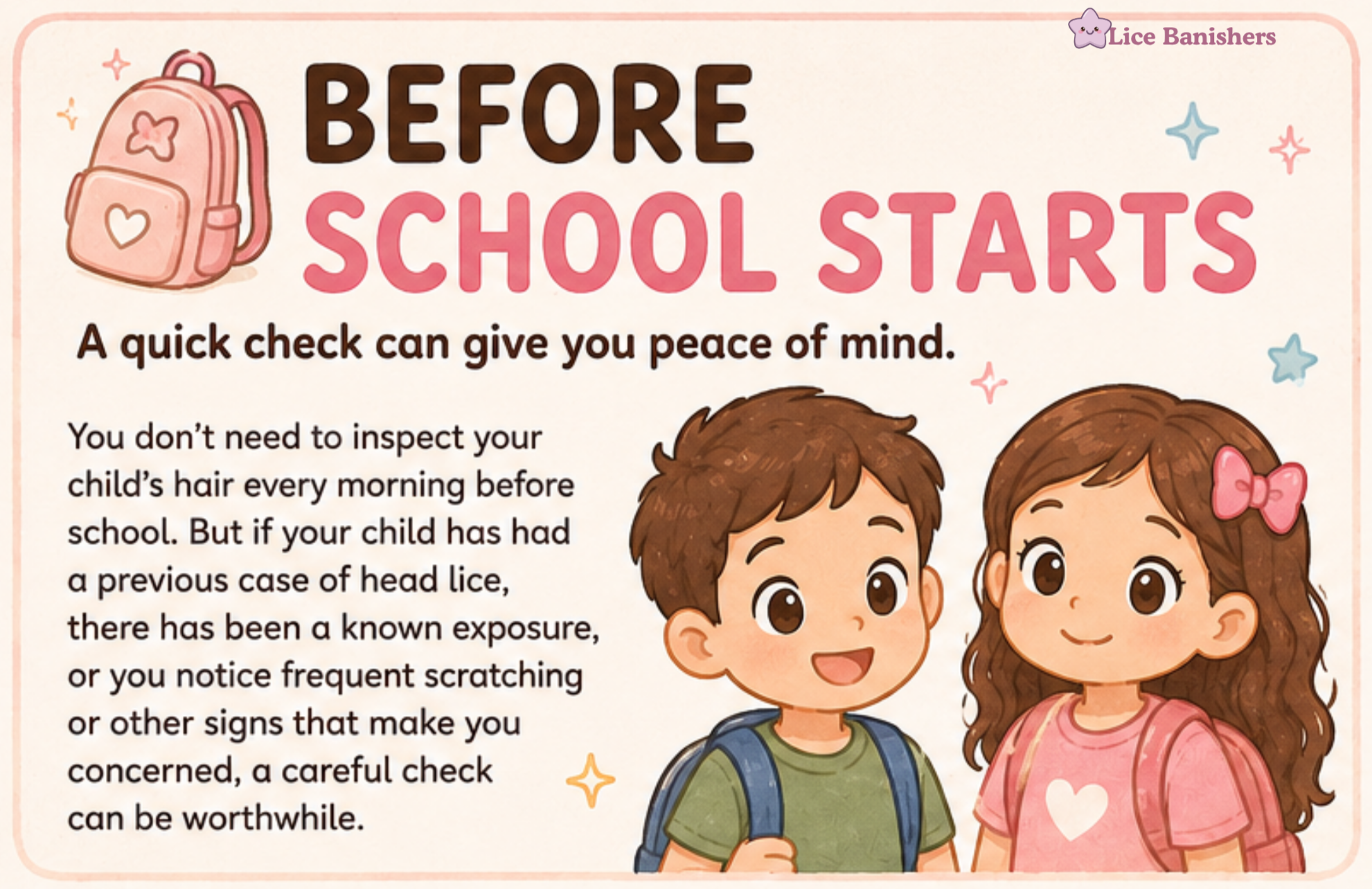
The start of a new school year does not mean you need to inspect your child's hair every morning.
For most families, routine daily inspections are unnecessary. However, a careful check can make sense if your child has recently had head lice, has had a known exposure, or you have noticed frequent scratching or other signs that make you concerned.
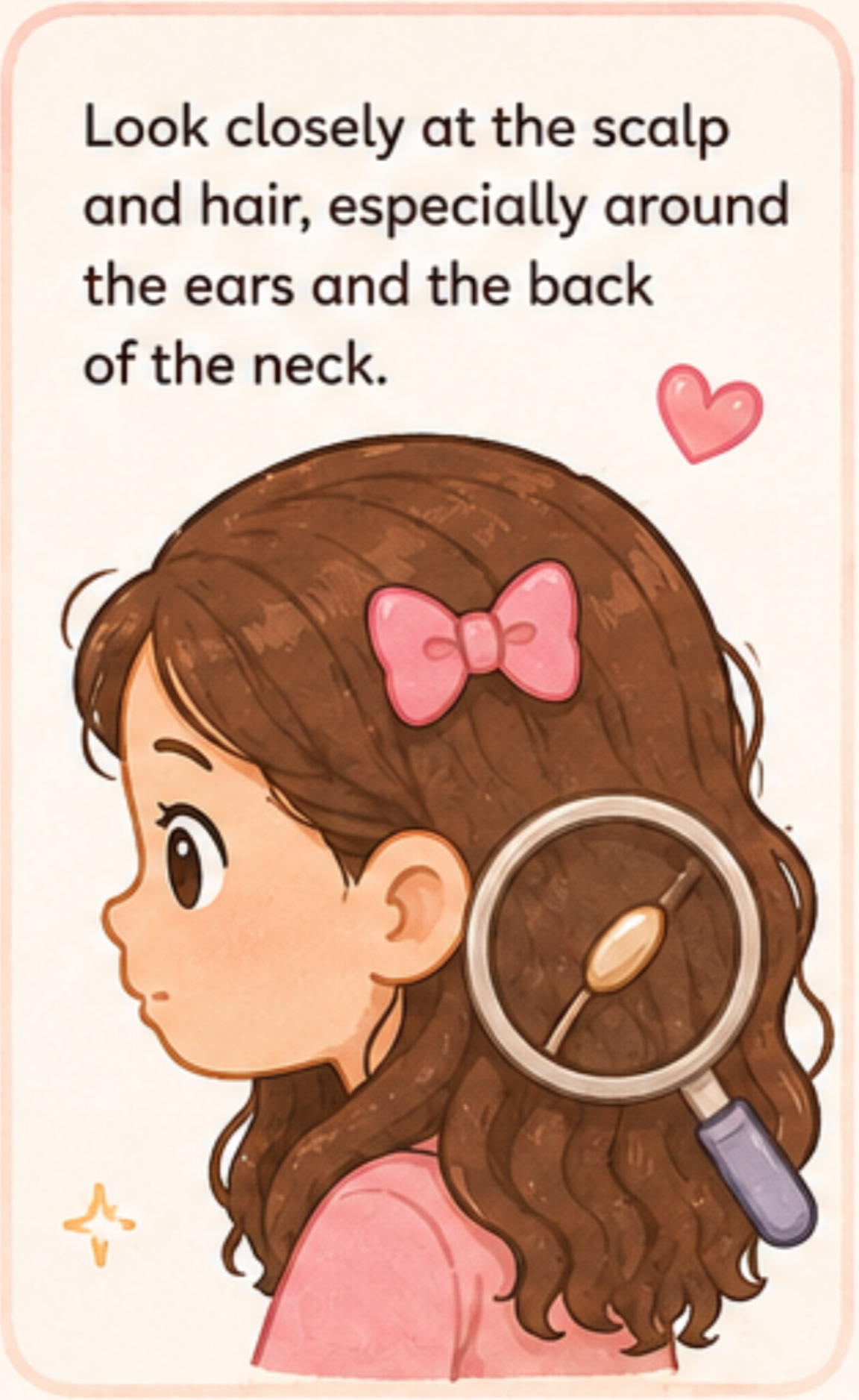
If you decide to check, take your time and look closely at the scalp and hair. Pay particular attention to the areas around the ears, the nape of the neck, and close to the scalp.
One of the most reliable signs of an active infestation is finding a live, crawling louse. Nits may also be present, but it is important to remember that not every white or brown speck attached to the hair is a nit. Dandruff, product residue, lint, and other debris can easily be mistaken for lice or nits.
Knowing what you are actually looking for can help you avoid unnecessary worry.
If you need a refresher on how to recognize head lice and understand the difference between lice, nits, and other things you may find in the hair, visit ourCommon Signs of an Active Lice Infestationguide.
BEFORE THE FIRST DAY
A little preparation can go a long way.
Before school begins, take a few minutes to talk with your child about simple habits that can help reduce opportunities for head lice transmission.
CHECK YOUR CHILD'S HAIR IF YOU HAVE A REASON TO BE CONCERNED
If there has been a known exposure, a recent case of head lice, or something about your child's scalp or hair concerns you, a careful check can provide useful information.
There is no need to turn this into a daily ritual. The goal is awareness—not anxiety.
KEEP PERSONAL HAIR ITEMS PERSONAL
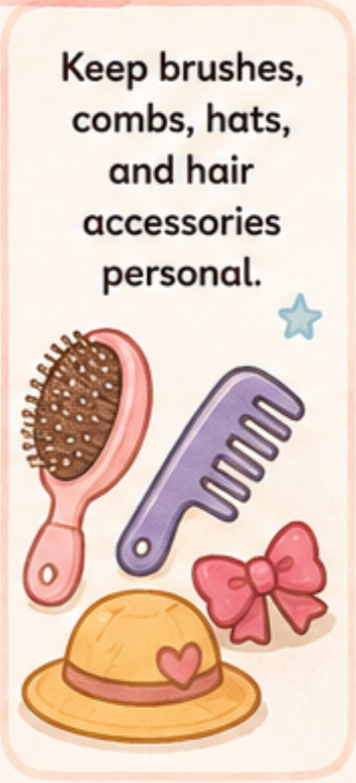
Teach children that brushes, combs, hats, caps, and hair accessories are personal items.
This is a simple rule that can become part of their normal school routine without making head lice a source of fear.
TALK ABOUT HEAD-TO-HEAD CONTACT
Children naturally get close when they play, take pictures, watch something together, or spend time with friends.
You do not need to teach your child to avoid other children. Instead, explain that prolonged head-to-head contact is something to avoid when possible.
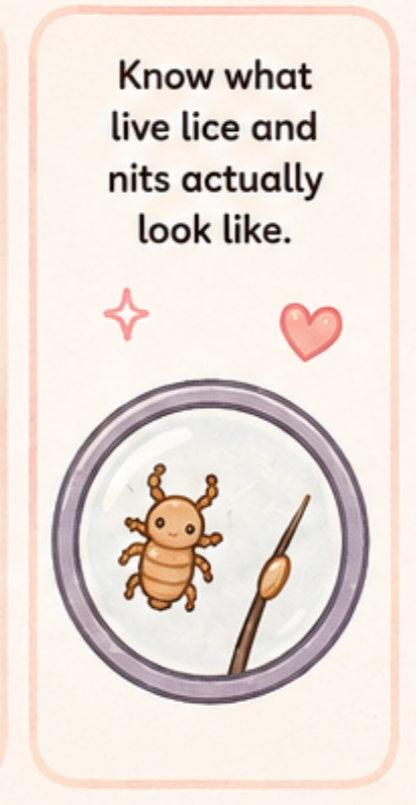
KNOW WHAT LIVE LICE AND NITS ACTUALLY LOOK LIKE
Knowing what you are looking for is one of the best ways to stay calm.
A single white speck does not automatically mean your child has head lice, and an itchy scalp does not automatically mean there is an infestation.
When you know the signs, you can respond based on what you actually see rather than reacting to fear.
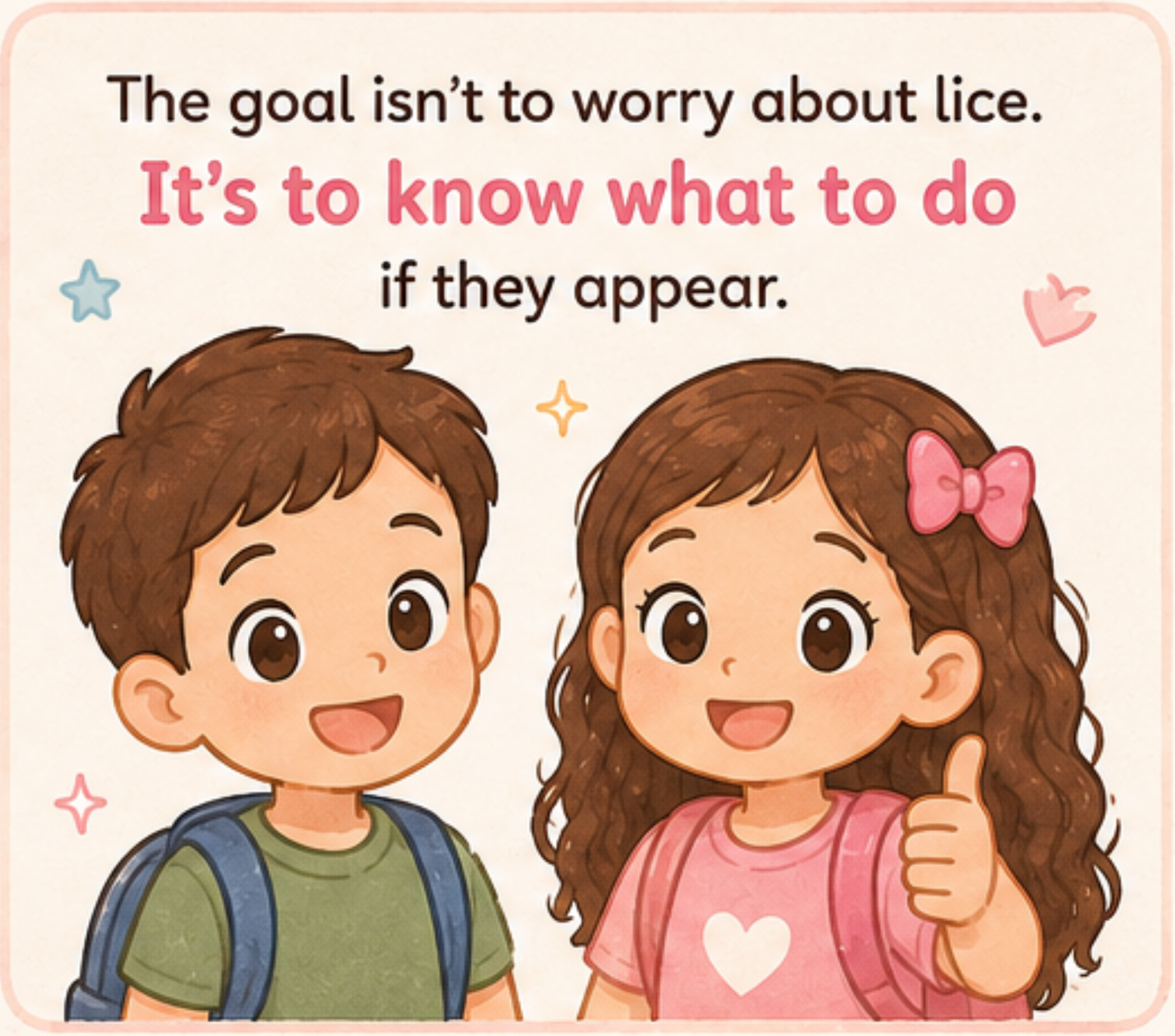
The goal isn't to worry about lice.
The goal is to know what to do if they appear.
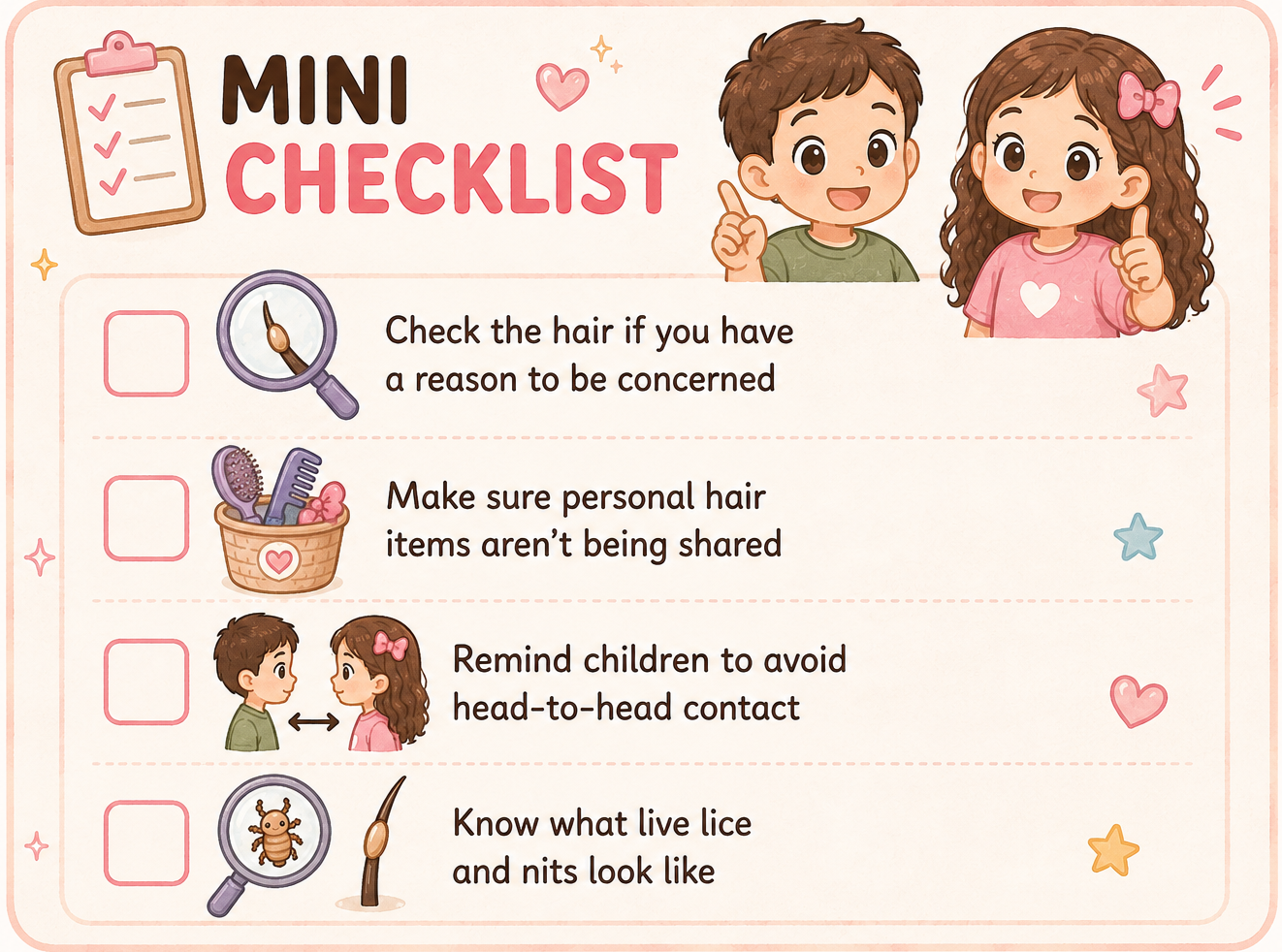
YOUR BACK-TO-SCHOOL HEAD LICE CHECKLIST
Getting ready for back-to-school season doesn't have to be complicated.
A few simple habits and a little awareness can go a long way. Use this quick checklist to help your family start the school year feeling prepared, informed, and confident.
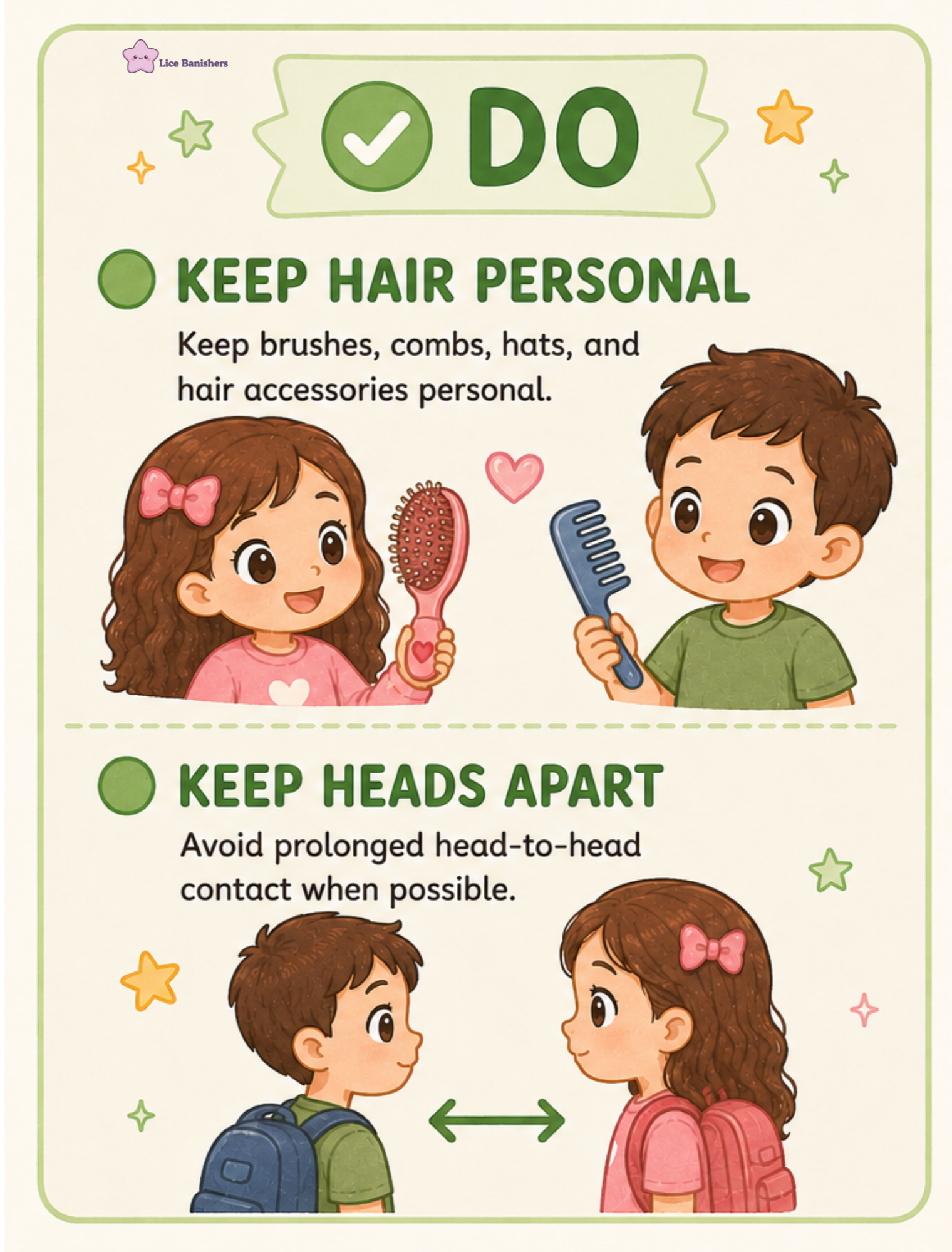
🟢 DO / 🔴 DON'T
A few simple habits can go a long way.
The goal isn't to make children afraid of getting lice. It's to teach practical habits that fit naturally into everyday school life. These simple do's and don'ts can help families stay informed, prepared, and confident throughout the school year.
KEEP HAIR ITEMS PERSONAL
Keep brushes, combs, hats, caps, and hair accessories personal.
Teaching children not to share items that regularly touch the hair is a simple habit that can become part of their everyday routine.
KEEP HEADS APART
Avoid prolonged head-to-head contact when possible.
Children can still play, socialize, participate in activities, and enjoy school normally. The goal is simply to be mindful of situations where heads remain in close contact for an extended period.
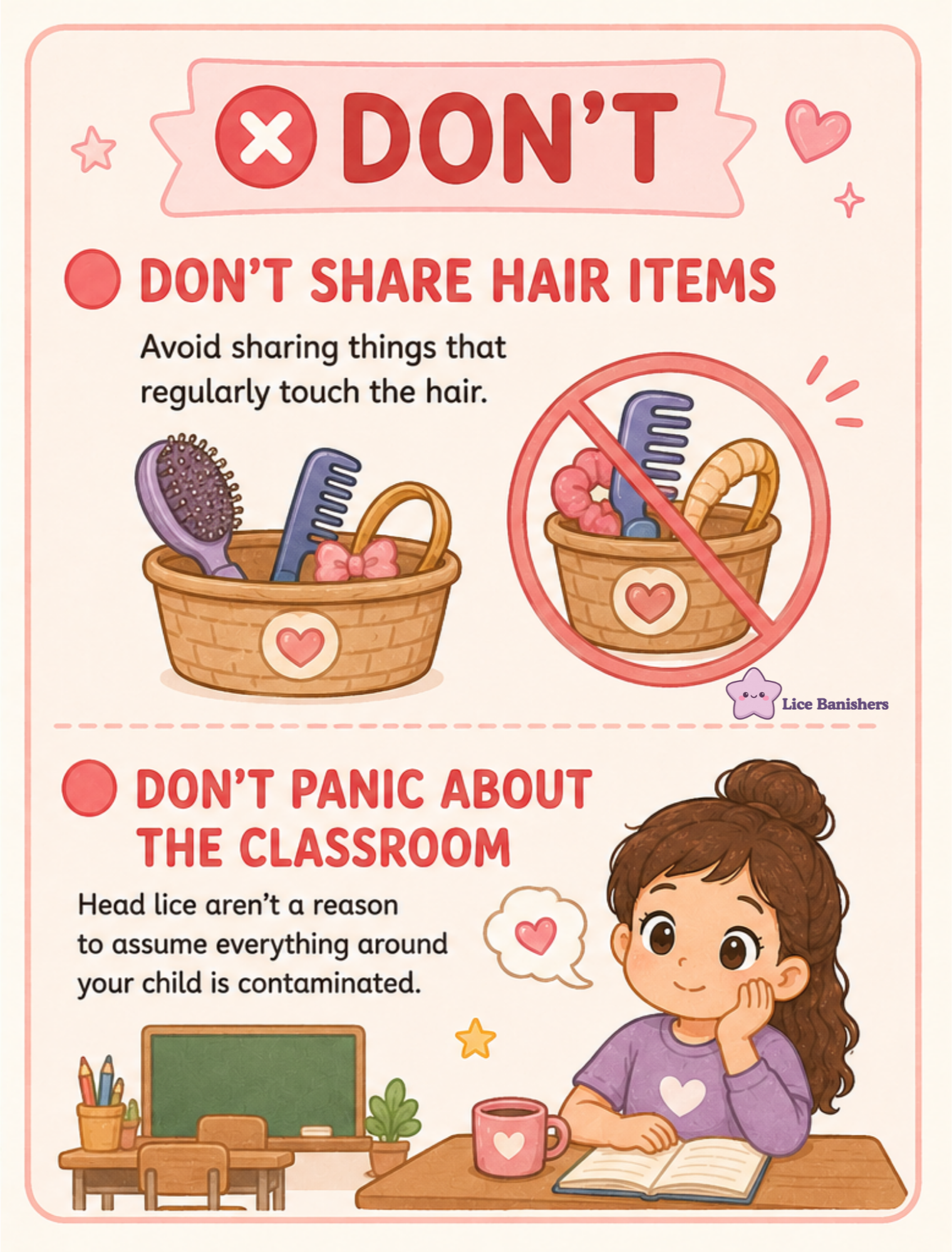
DON'T SHARE HAIR ITEMS
Avoid sharing items that regularly come into contact with the hair, including brushes, combs, hats, caps, and certain hair accessories.
DON'T PANIC ABOUT THE CLASSROOM
If you receive a notice that a child in your child's classroom has head lice, try not to assume that everything around your child is contaminated.
Head lice are not a reason to panic-clean the classroom, disinfect every surface, or keep your child isolated from normal activities.
Instead, focus on what you can control: knowing what to look for, practicing sensible habits, and knowing what steps to take if you find lice.
🔍 KNOW THE HOT SPOTS
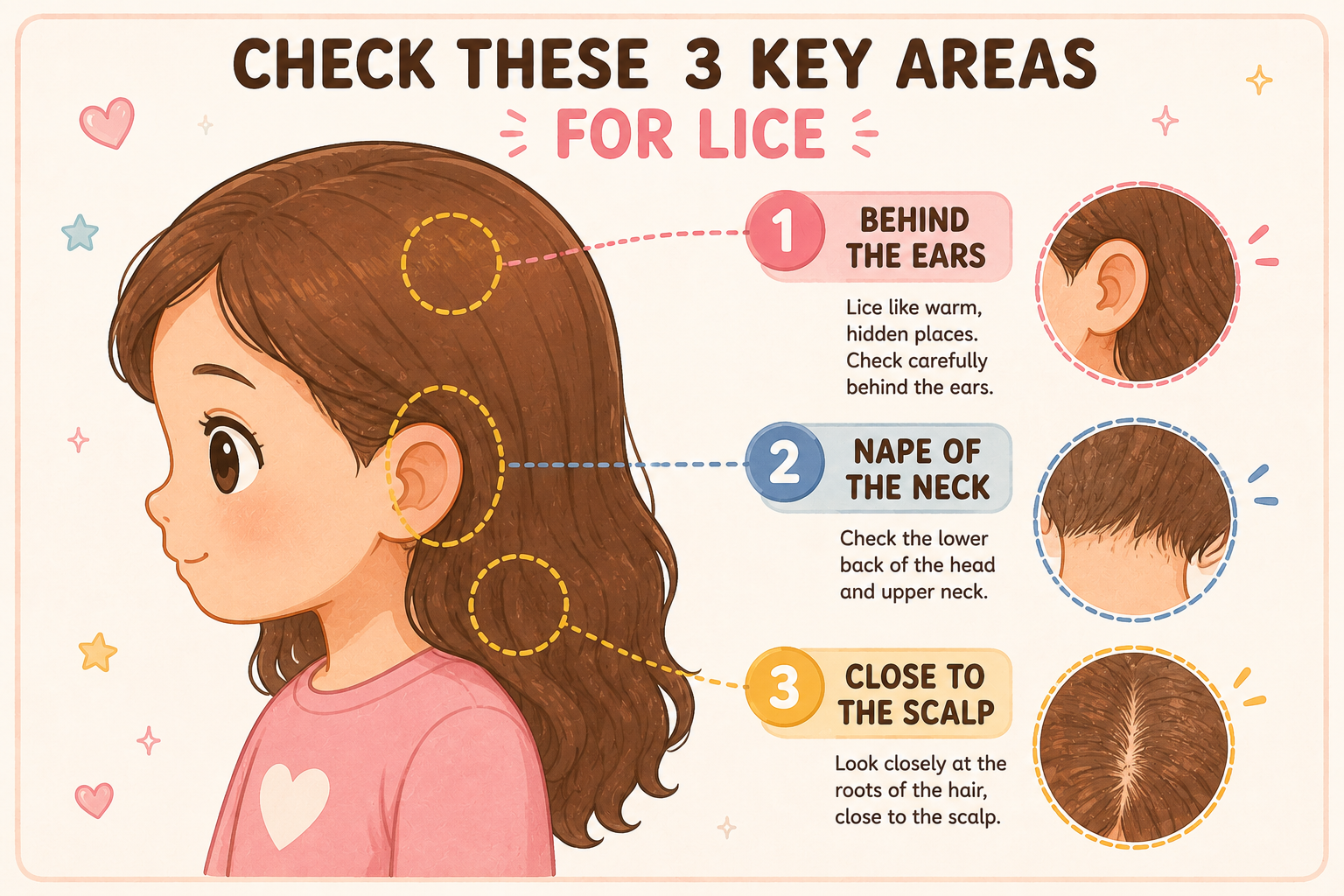
If you are checking your child's hair, there are a few areas worth paying particular attention to.
1. BEHIND THE EARS
Look carefully around and behind the ears, where hair can be warm and close to the scalp.
2. NAPE OF THE NECK
Check along the hairline at the back of the neck, especially when examining the area close to the scalp.
3. CLOSE TO THE SCALP
When looking for nits, pay attention to eggs that are firmly attached to individual hairs and located close to the scalp.
Remember: not every speck attached to a strand of hair is a nit.
When in doubt, confirmation is better than guessing.
WHAT SHOULD YOUR CHILD CARRY IN THEIR BACKPACK?
Think Habits, Not a "Lice Prevention Kit"
There is no special product your child needs to carry in a backpack to prevent head lice.
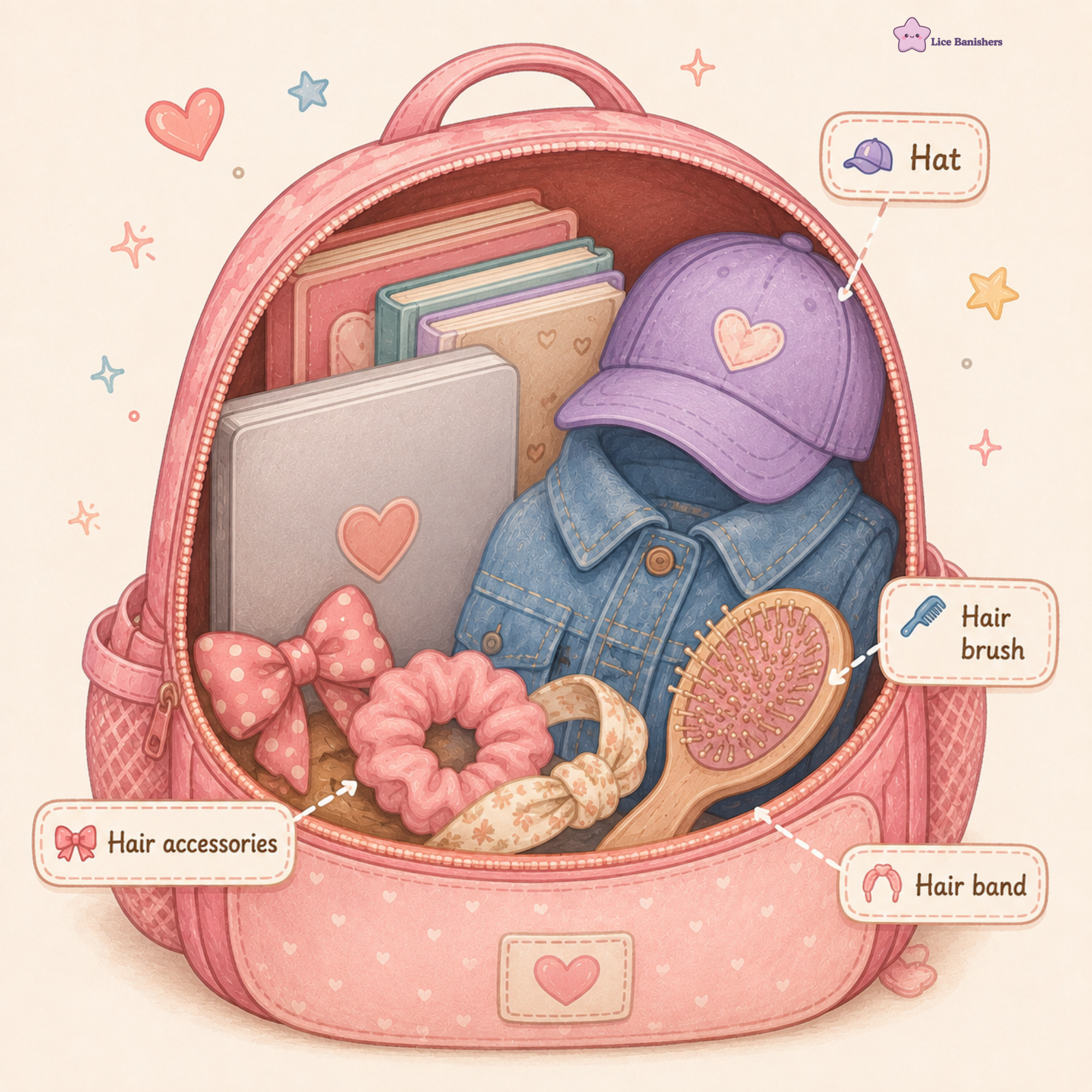
What can be useful, especially for children who go directly from school to sports, dance, clubs, or other activities, is having their own personal items available when needed.
Depending on your child's routine, that may include:
🪮 A PERSONAL BRUSH OR COMB
If your child needs to fix their hair after school, sports, or another activity, having their own brush or comb eliminates the need to borrow someone else's.
🧢 PERSONAL HATS OR CAPS
If a hat or cap is required for an activity, keep it personal rather than sharing it with friends.
🎀 PERSONAL HAIR ACCESSORIES
For children with longer hair, keeping their own hair ties, clips, or other accessories available can be practical throughout a busy day.
THE REAL GOAL
You do not need to fill your child's backpack with products marketed as "lice protection."
The more useful approach is teaching simple habits your child can actually remember.
The goal isn't to pack a lice-prevention kit.
It's to build good habits.
LIFE DOESN'T END WHEN THE SCHOOL BELL RINGS
For many children, the school day is only the beginning.
They may go directly from the classroom to soccer practice, dance class, music lessons, clubs, playdates, or a friend's house. These activities are an important part of childhood—and there is no reason to make children afraid of participating.
However, some activities naturally involve closer physical contact than others.
Understanding these situations allows parents to be prepared without becoming overly concerned.
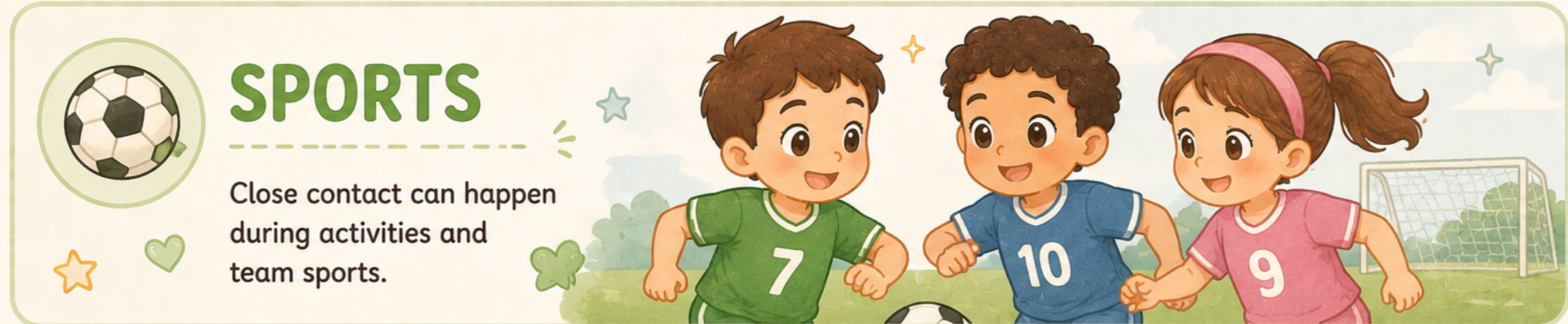
🏃 SPORTS
Sports and team activities can involve close physical contact.
Depending on the sport, children may gather closely before or after practice, sit together, hug teammates, or interact at close range.
This does not mean your child needs to avoid sports or extracurricular activities.
Instead, reinforce the same simple habits:
Keep personal hair items personal.
Avoid prolonged head-to-head contact when possible.
Do not share brushes, combs, hats, or hair accessories.
🎭 AFTER-SCHOOL ACTIVITIES
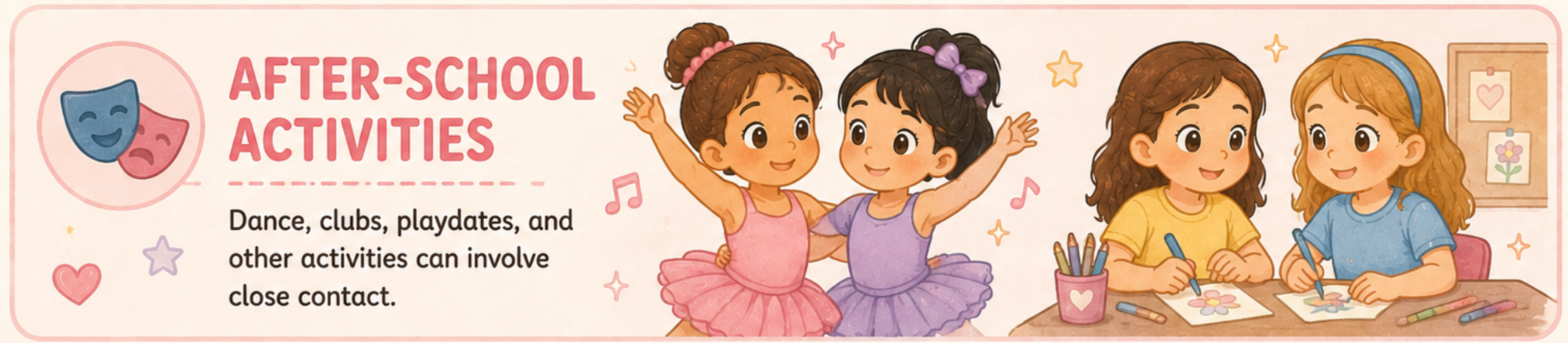
Dance classes, theater, clubs, music programs, playdates, and other extracurricular activities can bring children together in small spaces.
Again, the goal is not to create fear around these activities.
Children should be able to enjoy their friendships and interests without feeling that they need to avoid everyone around them.
A few simple habits are enough:
Keep personal belongings personal.
Avoid sharing hair items.
Be mindful of prolonged head-to-head contact.
💤 SLEEPOVERS
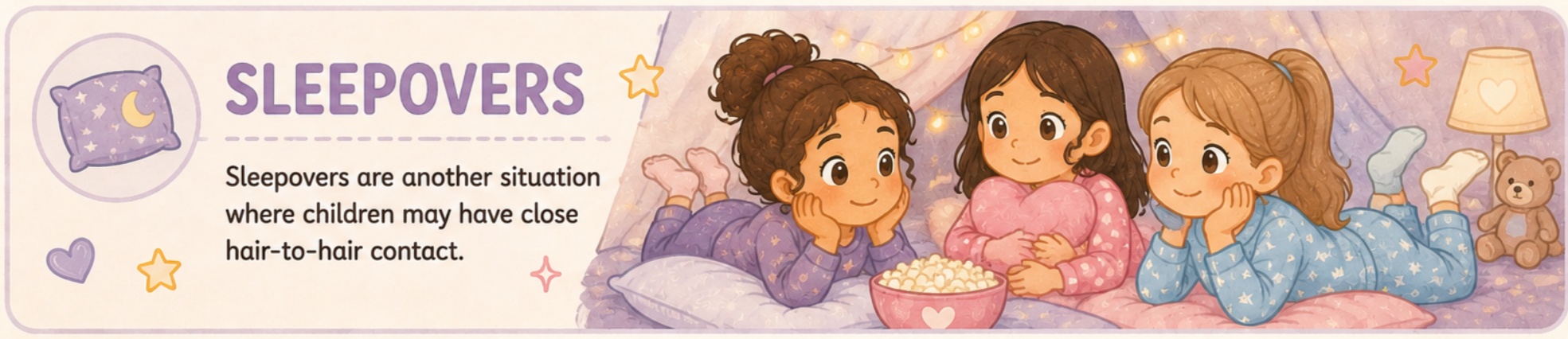
Sleepovers deserve a little extra attention because children may spend many hours together in close proximity.
They may lie next to one another while watching a movie, play together, take pictures, talk late into the night, or simply spend extended periods with their heads close together.
You do not need to make sleepovers scary or tell your child that they cannot have fun with friends.
Instead, reinforce the same basic habits you use everywhere else:
Personal hair items stay personal.
And when possible, avoid prolonged hair-to-hair contact.
The goal is not to eliminate normal childhood experiences. It is to help children develop simple habits that become second nature.
I FOUND LICE. NOW WHAT?
Finding a live louse in your child's hair can be overwhelming.
One moment everything seems normal, and the next you're wondering what to do, who else may be affected, and how quickly you need to act.
Questions often start racing through your mind:
What should I do first?
Does everyone in the family need to be checked or treated?
Can my child still go to school?
Do I need to wash everything in the house?
How do I know if I'm handling this correctly?
The good news is that you do not need to figure everything out at once.
Take a deep breath, stay calm, and focus on one step at a time.
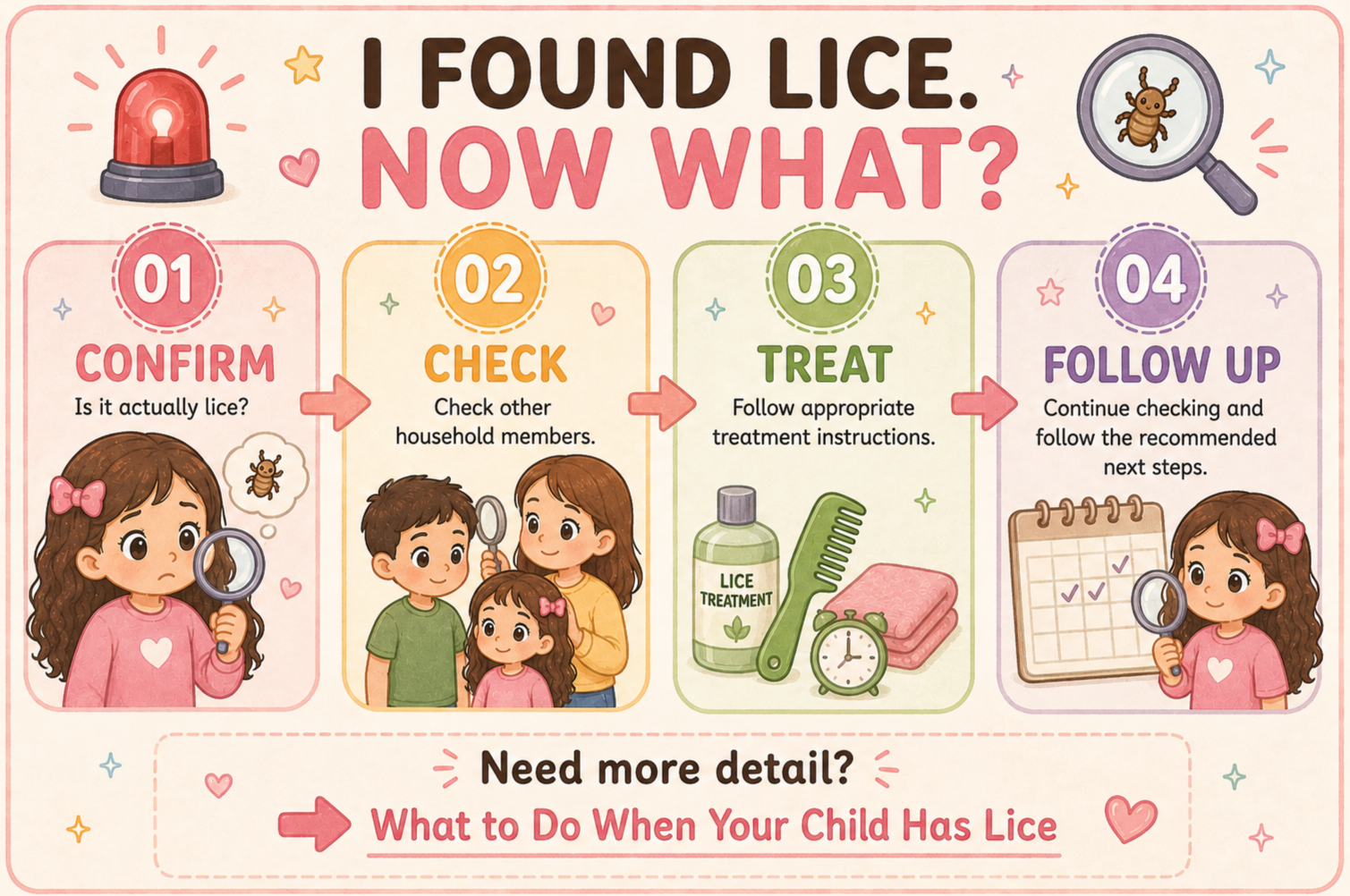
The four steps below will help you move forward with confidence and avoid many of the common mistakes families make when dealing with head lice for the first time.
CONFIRM
Is It Actually Lice?
Before you begin treatment or start cleaning your entire home, make sure you know what you are looking at.
Not every white speck is a nit, and not every itchy scalp means head lice.
Whenever possible, confirm that you are actually dealing with head lice before beginning treatment.
If you are unsure about what you are seeing, our Common Signs of an Active Lice Infestation guide can help you understand what to look for.
CHECK
Check Other Household Members
Once head lice have been confirmed, the next step is to check the other people in the household.
This does not mean everyone automatically has lice or that everyone should automatically be treated.
It means household members should be checked so you know who, if anyone, is affected.
This is especially important in families where children spend a lot of time together, share rooms, or have frequent close contact.
Check first. Treat when appropriate.
TREAT
Follow Appropriate Treatment Instructions
Once you have confirmed an active infestation, treatment should be based on the method you choose and the instructions associated with it.
Follow treatment directions carefully, including instructions regarding application, lice and nit removal, and whether additional treatment or follow-up is recommended.
Avoid randomly combining multiple products or repeating treatments simply because you are anxious about missing something.
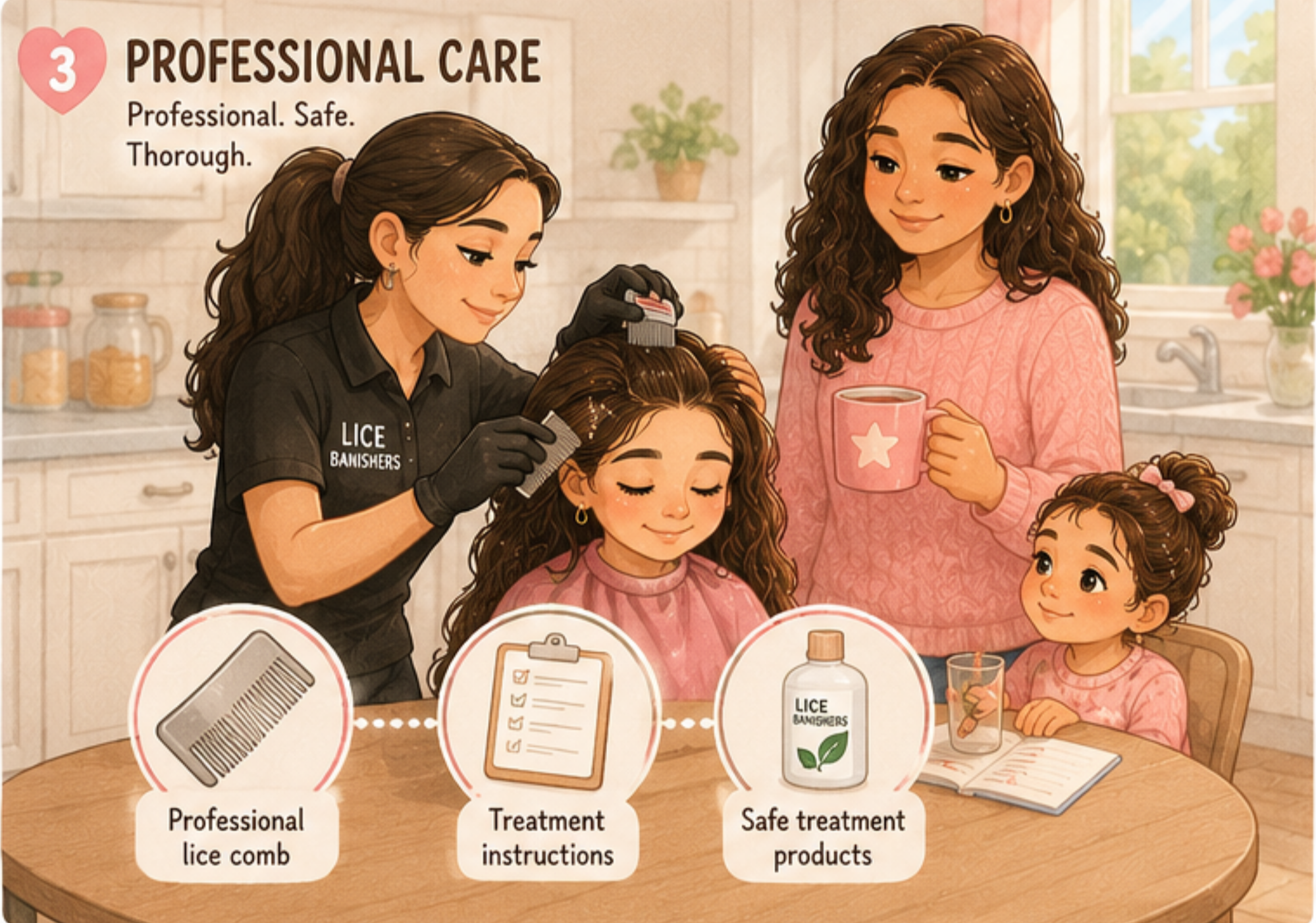
If you are unsure what treatment approach is appropriate for your family, professional lice removal can take the guesswork out of the process and provide personalized assistance.
FOLLOW UP
Don't Stop at the First Step
Completing the initial treatment is not necessarily the end of the process.
Continue checking as recommended and follow the instructions associated with your chosen treatment method.
Pay attention to what you are finding and whether the situation is improving.
The goal is not simply to treat what you see today.
The goal is to properly manage the infestation and make sure you know what to do next.
🏫 WHAT IF MY CHILD HAS LICE?
SHOULD I SEND MY CHILD TO SCHOOL?
This is one of the first questions many parents ask after finding lice—and the answer may depend on your school's policy.
If you discover head lice before school, contact the school or review its current head lice policy for specific instructions regarding attendance, notification, and returning to class.
Policies can differ from one school or school district to another, so it is important to follow the policy that applies to your child's school.
At the same time, remember that head lice are not a reflection of poor hygiene or cleanliness.
Your child does not need to feel embarrassed, ashamed, or "dirty."
Stay calm, handle the situation privately, and focus on the next appropriate step.
If you need help understanding what to do after finding lice, visit:
→ What to Do When Your Child Has Lice
WHAT ABOUT THE FAMILY?
When one child has lice, it is completely understandable for parents to worry about everyone else.
But this is where staying calm becomes especially important.
The goal is not to treat everyone automatically or turn your home upside down.
The goal is to check, confirm, and respond appropriately.
Before you start washing every blanket, cleaning every room, or treating family members "just in case," take a moment to focus on what actually matters. Many of the things parents instinctively do after finding lice are unnecessary and can create more stress than solutions.
Let's take a look at some common mistakes to avoid.
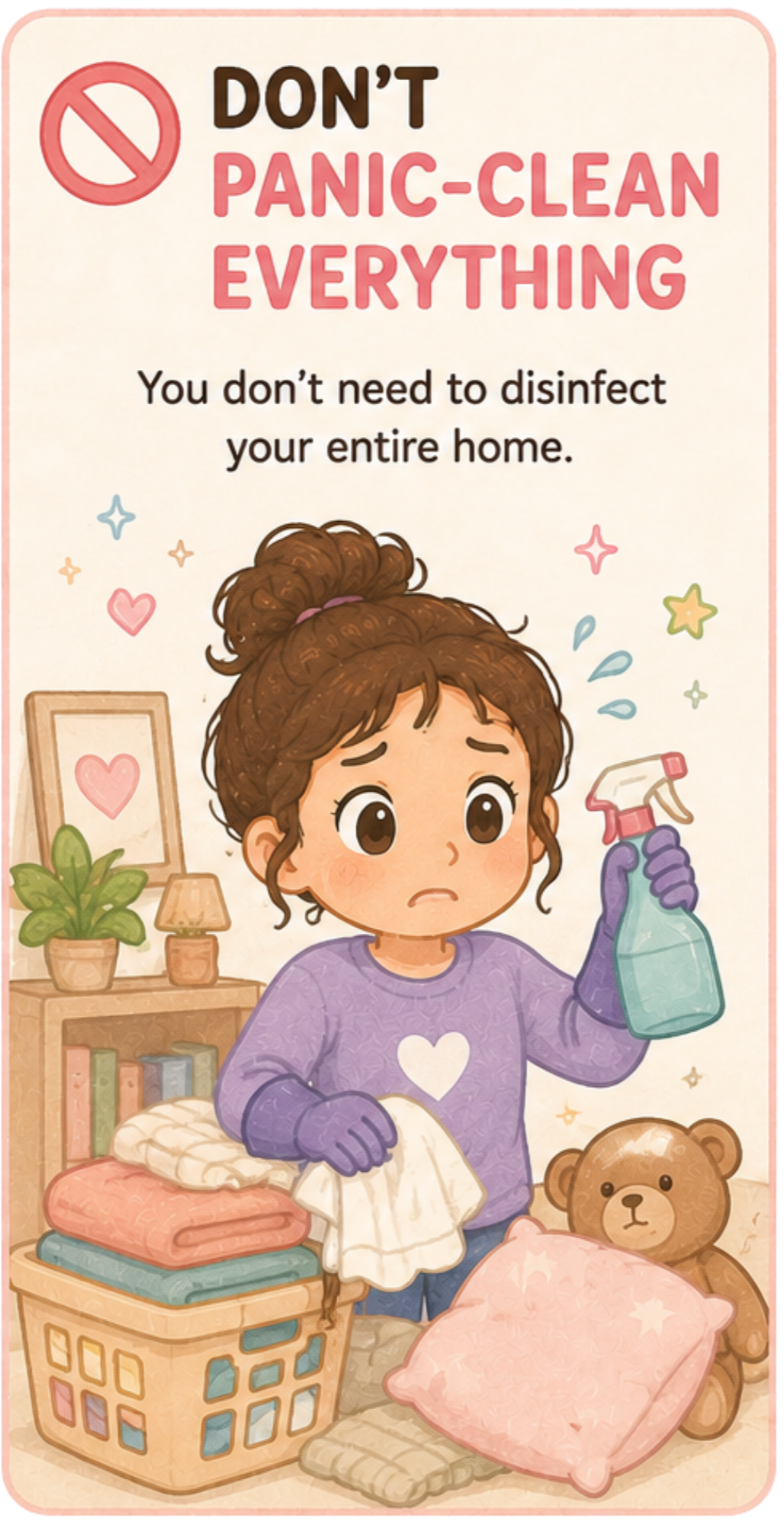
🚫 DON'T PANIC-CLEAN EVERYTHING
You do not need to disinfect your entire home.
Head lice do not require your home to be treated like a contaminated environment.
Rather than spending hours spraying surfaces and cleaning every item your child has touched, focus your attention on appropriate lice management and follow reliable treatment and follow-up recommendations.
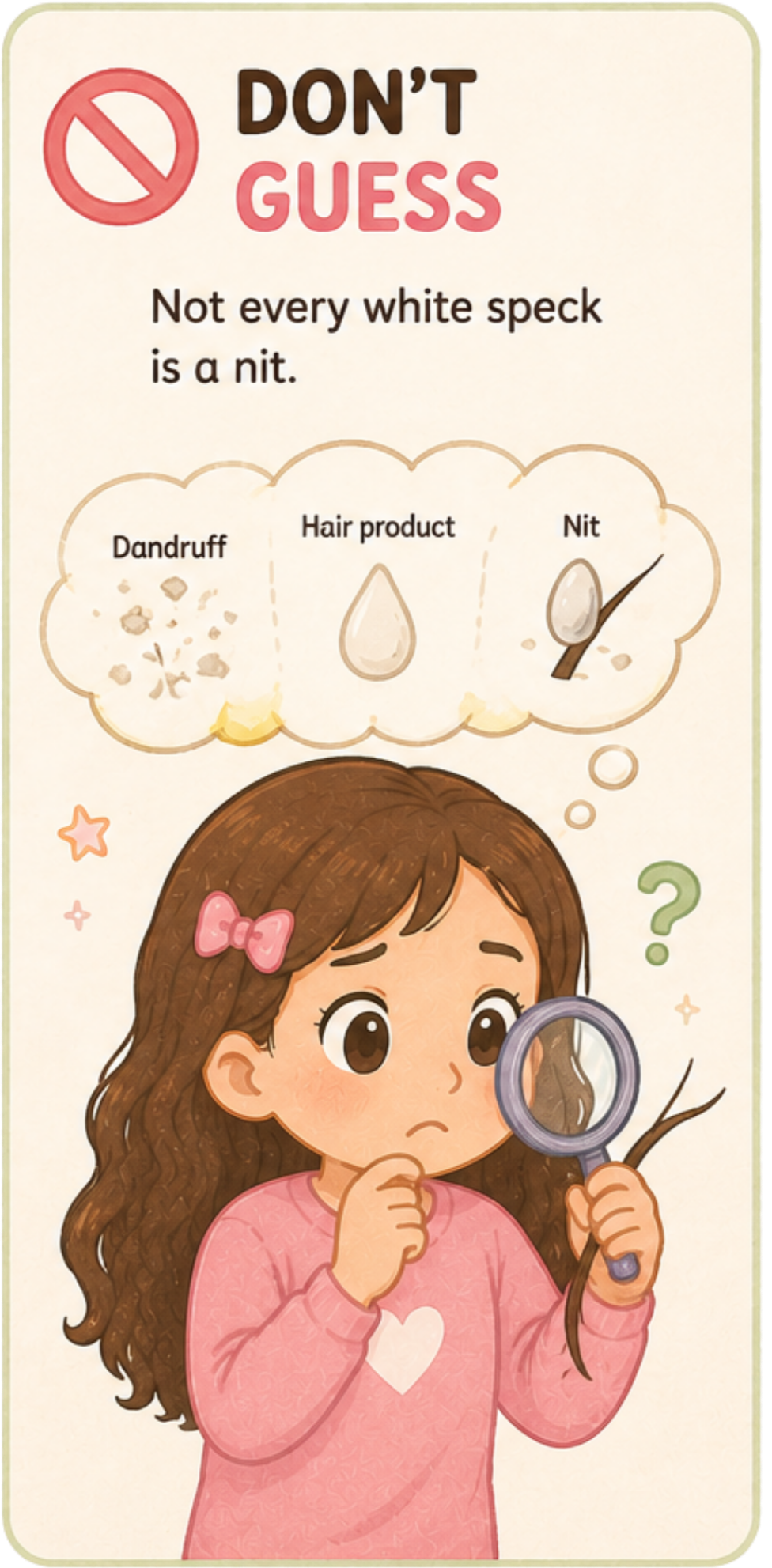
🚫 DON'T GUESS
Not every white speck is a nit.
Not every itchy scalp means lice.
And not every household member automatically needs treatment.
If you are unsure what you are seeing, confirmation can save you from unnecessary stress and unnecessary treatment.
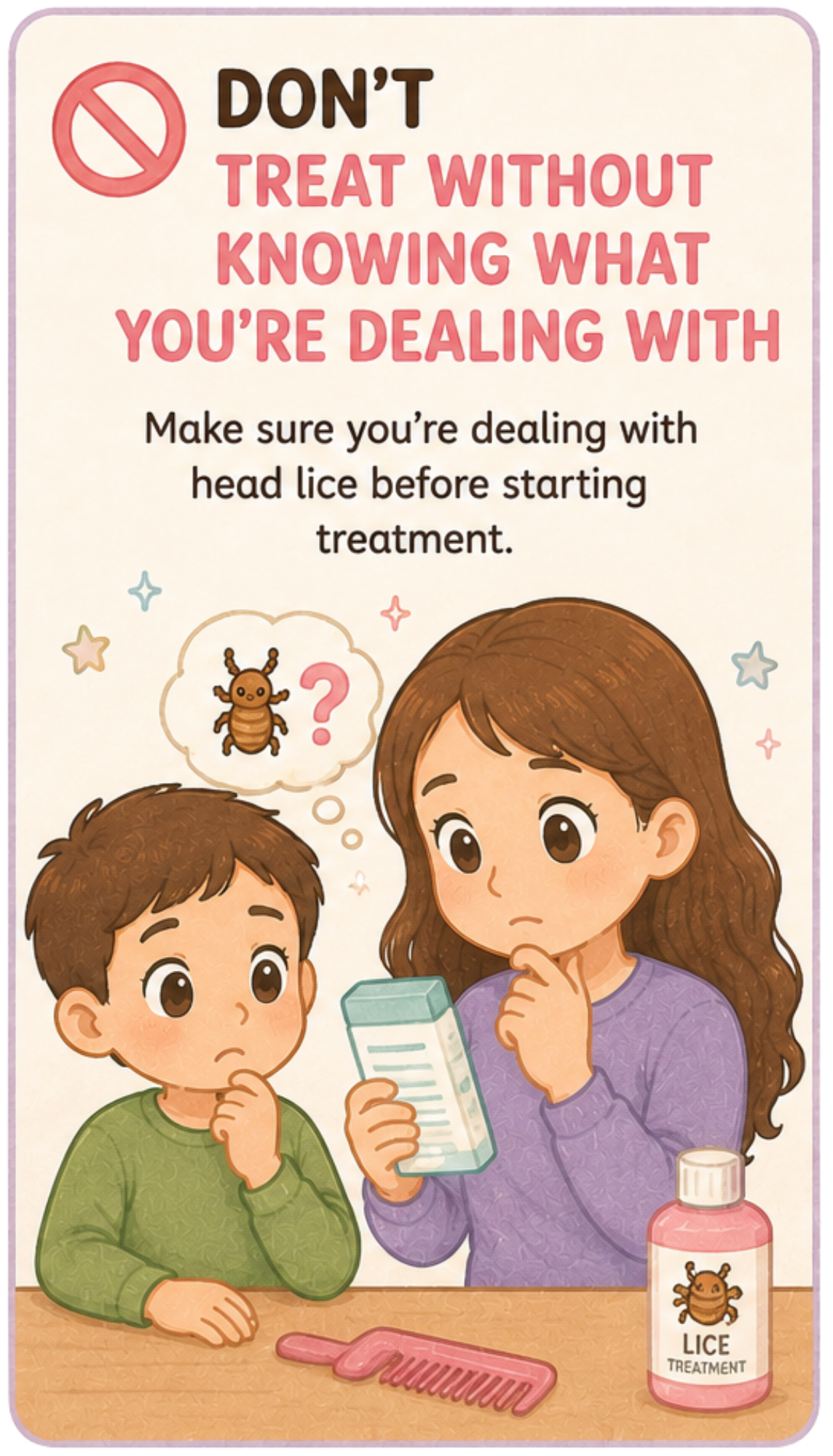
🚫 DON'T TREAT WITHOUT KNOWING WHAT YOU'RE DEALING WITH
Before starting treatment, make sure you are actually dealing with head lice.
Avoid treating family members simply because one person in the household has been diagnosed.
Check first. Then take the appropriate next step.
If you need more guidance after discovering lice, visit:
→ What to Do When Your Child Has Lice
🎒 YOUR BACK-TO-SCHOOL LICE CHECKLIST
Before you go, here's a quick summary of the most important takeaways from this guide.
Whether you're preparing for the school year or dealing with lice right now, this checklist can help you stay organized, informed, and confident about what to do next.
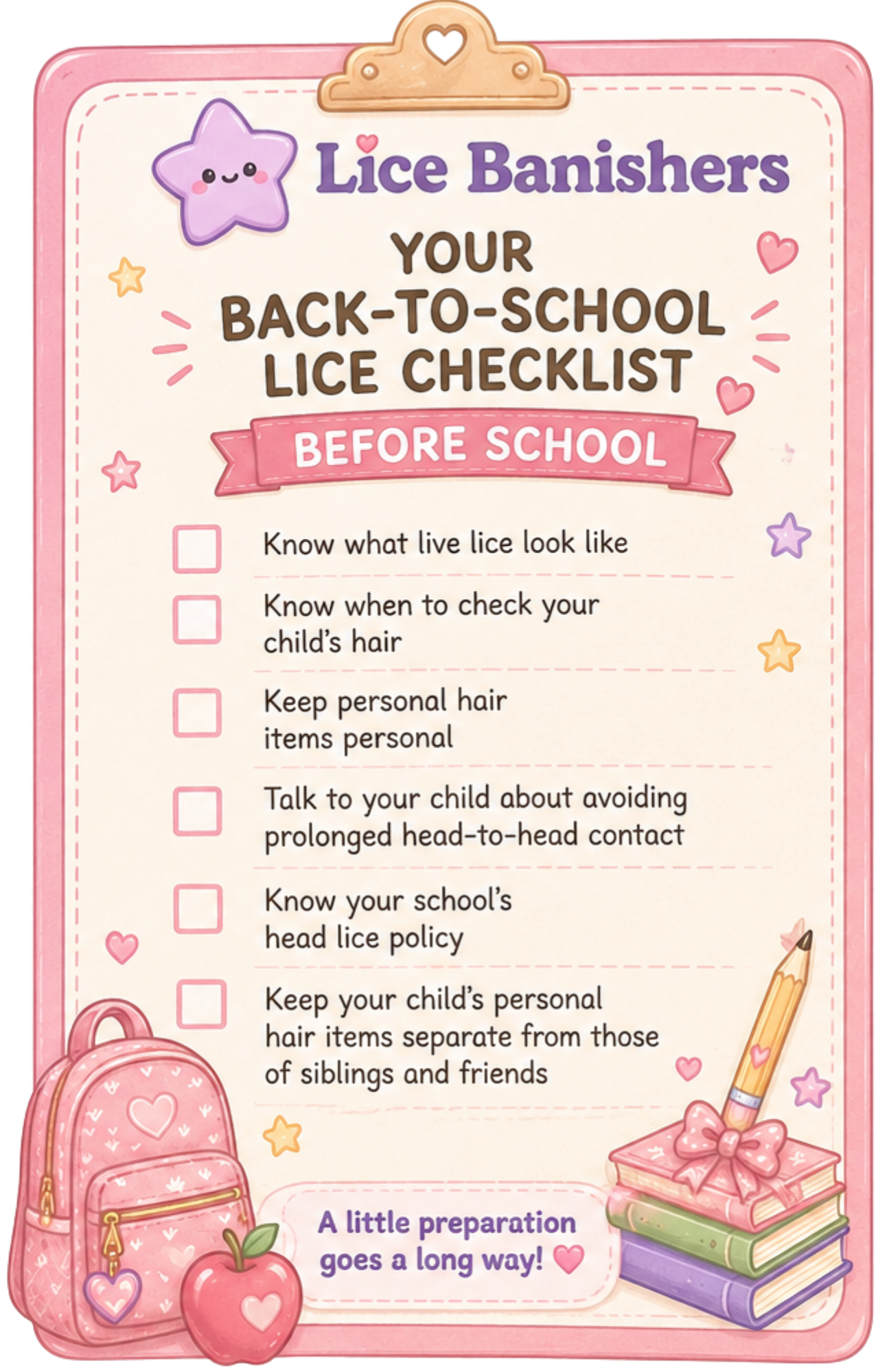
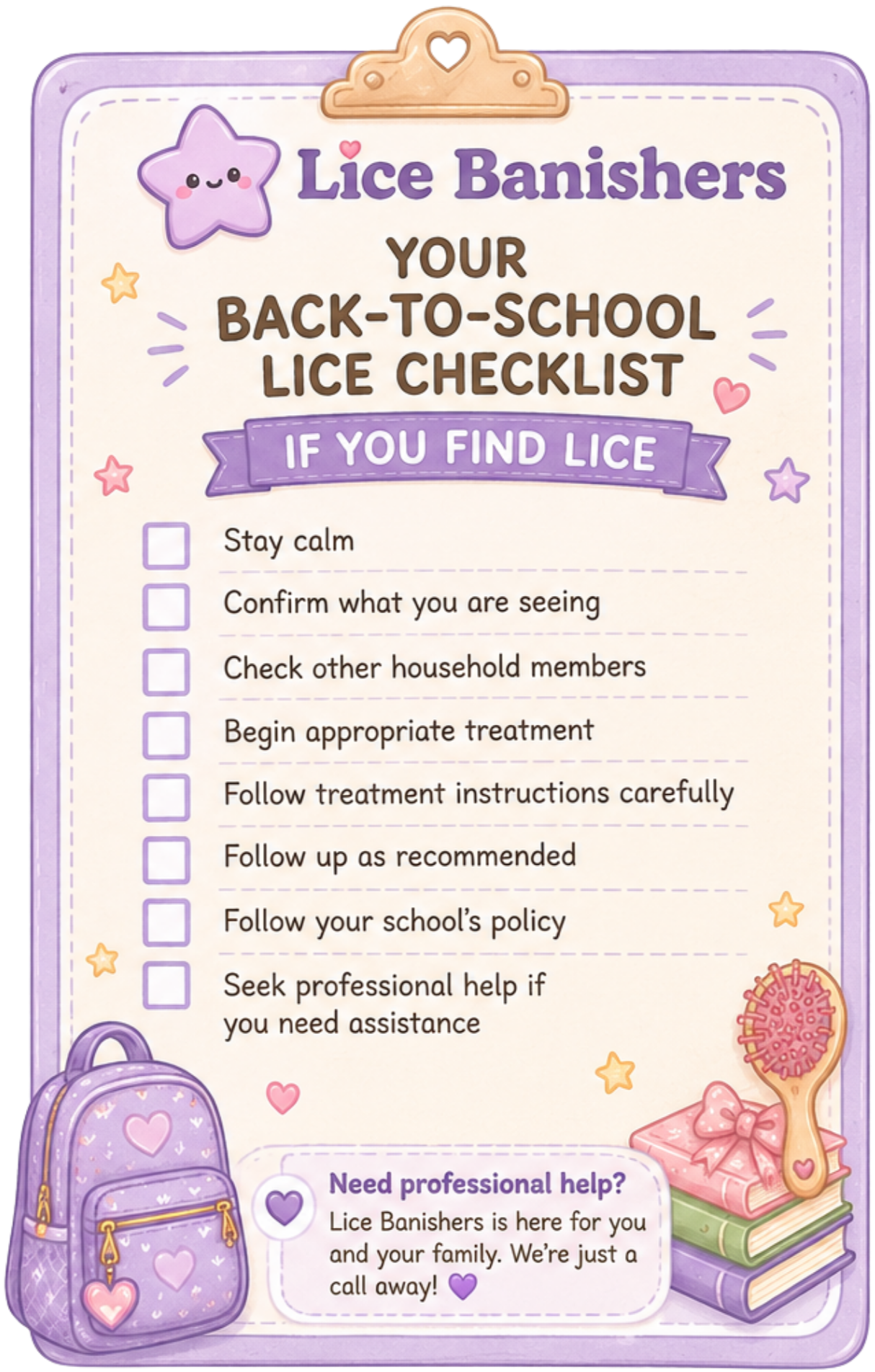
Want a copy for easy reference? Download and save this checklist for future use.
💛 HEAD LICE SHOULDN'T TAKE OVER YOUR BACK-TO-SCHOOL SEASON
Back-to-school preparation does not have to include fear of head lice.
You do not need to inspect your child's hair every morning, disinfect your entire home, or teach your child to be afraid of other children.
What can make a difference is being informed.
Know what you are looking for.
Know when a check makes sense.
Teach simple habits.
Keep personal hair items personal.
Talk with your child about avoiding prolonged head-to-head contact.
And most importantly, know what to do if you ever find lice.
Because the goal is not to spend the school year worrying about head lice.
The goal is to feel prepared if they ever show up.
NEED MORE HELP?
If you think your child may have head lice, start by learning how to recognize an active infestation.
→ Common Signs of an Active Lice Infestation
Want to understand how head lice spread and separate fact from fiction?
→ Head Lice 101: A Parent's Guide
Already confirmed lice and not sure what to do next?
→ What to Do When Your Child Has Lice
Wondering whether it is time to call a professional?
→ When to Seek Professional Help
PRIVATE. PROFESSIONAL. PERSONALIZED.
When lice enter your household, you do not have to figure everything out on your own.
Lice Banishers provides professional lice screening and lice removal services designed to make the process as comfortable, discreet, and straightforward as possible for your family.
→ Explore Our Lice Removal Services
WHEN IN DOUBT, GET A PROFESSIONAL LICE SCREENING
If you think your child may have been exposed to head lice—or you have found something in their hair that you are not sure about—you do not have to figure it out on your own.
Sometimes the hardest part is simply knowing what you are looking at and what to do next.
At Lice Banishers, we offer professional lice screenings to help determine whether head lice are actually present. Our experienced lice technicians carefully examine the hair and scalp so you can have answers instead of guessing.
If lice are confirmed, we also provide professional lice removal treatments designed to effectively remove live lice and nits without the use of harsh or toxic chemicals.
Our goal is simple: to give your family a safe, thorough, and discreet solution—without unnecessary treatments, unnecessary stress, or the guesswork that often comes with trying to handle an infestation on your own.
THINK YOU MAY HAVE LICE?
Don't panic. Don't guess. Get answers.
Whether you need a professional screening for peace of mind or confirmed lice removal treatment, Lice Banishers is here to help you take the next step with confidence.
→ Schedule a Lice Screening
→ Explore Lice Removal Treatments
LICE BANISHERS
Professional Lice Screening & Removal
Safe. Discreet. Thorough.