
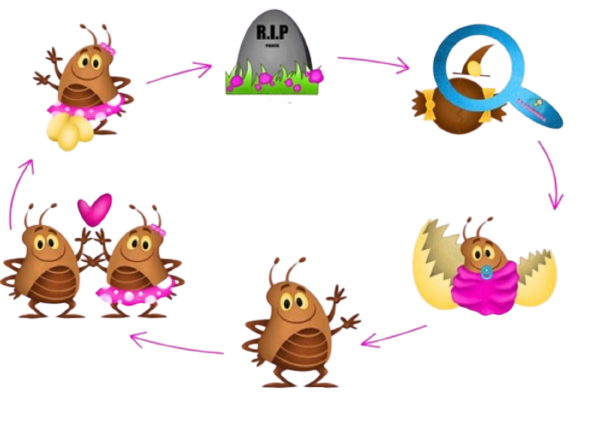
Lice develop in three stages: nit, nymph, and adult louse.
NITS ARE OVAL-SHAPED LICE EGGS THAT ARE LAID BY AN ADULT FEMALE NEAR THE BASE OF THE SCALP.
Nits are approximately 0.8 mm in size (similar to a sesame seed) and they resemble dandruff.
Nits will emulate the color of their host’s hair.
Females lay their eggs with glue, which makes them difficult to remove from the hair.
Nits on hair shafts, hatch in 6-10 days.
Each female louse will lay 5-8 eggs per day for 30 days.
NYMPHS ARE…WHEN A NIT HATCHES, A NYMPH IS BORN.
Nymphs are just smaller versions of adult lice, with six legs that each have a claw attached to the tip.
Growing nymphs must feed on human blood five to six times per day to survive.
The nymph molts as they grow until they finally reach the adult phase of life.
ADULT LOUSE…A FULLY GROWN LOUSE WILL REACH 2.5-3 MM IN LENGTH.
Lice are actually quite transparent and will often emulate the color of their host’s hair.
They do not have wings and are only able to transport themselves by crawling from hair strand to hair strand (or, from head to head)
If a louse falls off of its host’s head it has 24-48 hours to find a new food source.
The females will lay 5-8 eggs per day for 30 days.
HEAD LICE TIPS
-
Description text goes here
-
Description text goes here
-
Description text goes here